
My new area has so many new neighbours! We seem to have multiple groups of these birds, and I learnt that these are house sparrows. They are very chatty! I love waking up in the morning to hearing them chirping away in the surrounding bushes and trees.
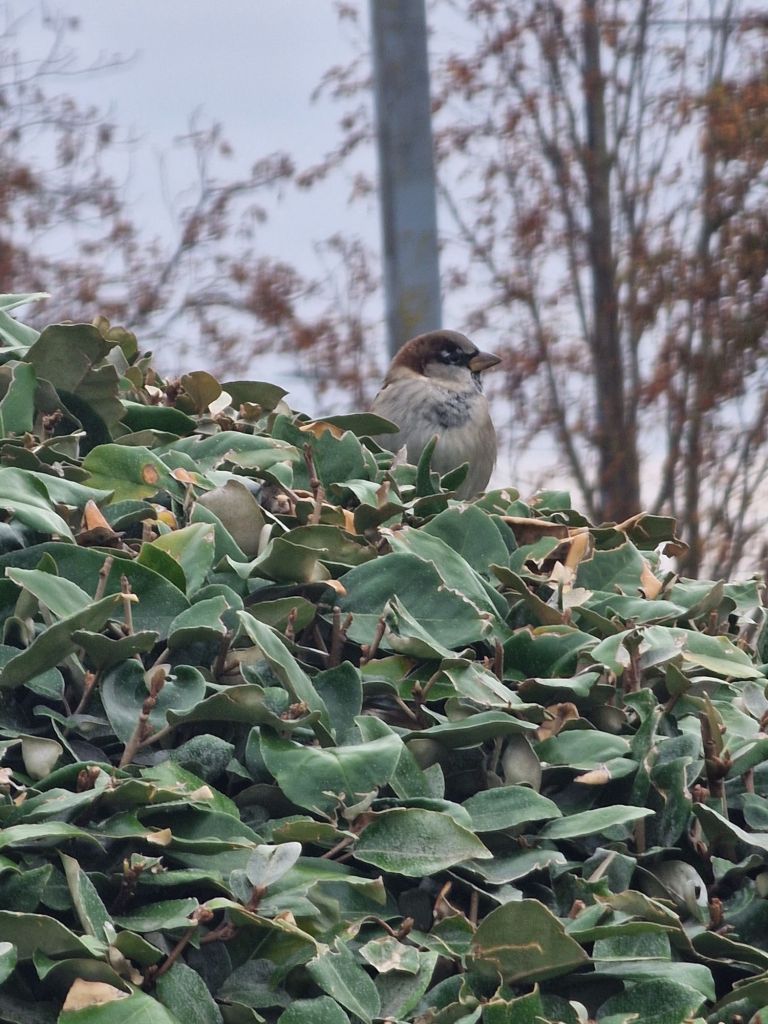
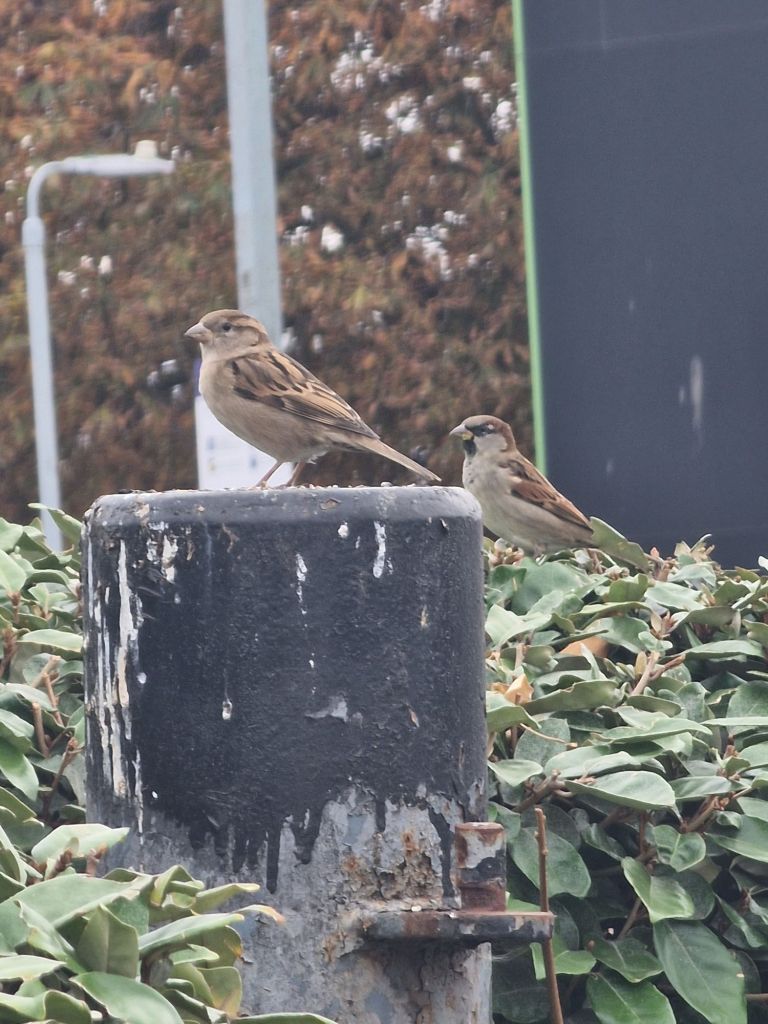
Males tend to have a grey cap, chestnut wings with white wing bars, a black bib on the throat, and a streaky brown back. Females and juvenile birds however tend to be a more uniform brown colour, which I think can be seen in this gorgeous couple below:
House sparrows are widespread throughout much of the world, and in the UK they can be found in built up areas. They are opportunistic feeders, eating buds, grains, seeds, and human food scraps, as well as needing to collect insects for their chicks during the nesting season. Despite being widespread, the house sparrow is a species of high conservation concern in the UK due to a large population decline, caused by a lack of nesting sites in modern building developments, loss of insects due to tidier gardens and pesticide use, and changes in farming practices which mean that their food source and nesting materials are harder to come across. It has been estimated that their populations have dropped by 71% between 1977 and 2008, with large falls in both rural and urban populations.
Whilst conservation efforts are helping to rebuild these populations, you can help your local population by installing nesting boxes around your property (under eaves are ideal), or by putting out lots of seeds and grains for them on bird tables and in bird feeders. You can also plant native shrubs and creepers in your gardens to promote new nesting sites and feeding grounds for your local house sparrow populations.
 Taylor Talks Vegan