
Book blurb:
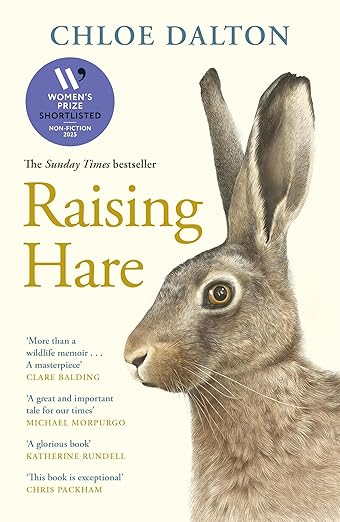
Imagine you could hold a baby hare and bottle-feed it. Imagine that it lived under your roof and lolloped around your bedroom at night, drumming on the duvet cover when it wanted your attention. Imagine that, over two years later, it still ran in from the fields when you called it and snoozed in your house for hours on end. This happened to me.
When Chloe, a city-dwelling professional with a high-pressure job, finds a newly born hare, endangered, alone and no bigger than her palm, she is compelled to give it a chance at survival – despite being the least likely caregiver to this wild animal.
Raising Hare is the story of their journey together. It chronicles an extraordinary relationship between human and animal, rekindling our sense of awe towards nature and wildlife. Their improbable bond of trust reminds us that the most remarkable experiences, inspiring the most hope, often arise when we least expect them.
I am not normally someone who reads memoirs, but I had heard great things about this book and I decided to give it a go. I will try my best not to spoil any of the key parts of the book, but I can see what the hype was about.
For starters, Chloe Dalton is a great writer, and I found myself relating to her more than I thought I would. The book begins with her as a working professional, living for her job as a journlist and her desire to always be in the centre of the action so she can get the best story to share with the public. The book begins just as the Covid 19 pandemic hit and she was having to spend more time at her home in the English countryside and the challenges that this brought without adding in a new born hare to the mix.
I very much appreciated Chloe’s approach to Hare. I call her Hare, but throughout the book she is nameless, aside from being nicknamed ‘Little One’ whilst Chloe was caring for her a newborn. It isn’t until about half way through the book that Chloe even finds out that Hare is indeed female, so the language used to describe Hare is very general. Chloe does make a point of stating that she did not want to keep Hare and was very much aware that they were brought together so that Chloe could nurse Hare until she was strong enough to go back into the wild. At no point in the book does Chloe suggest keeping Hare, and she also makes it very clear to any guests she has to her property that may interact with Hare that they should not give Hare an actual name, as she is not going to be with Chloe forever. I think so often we as a species we feel a need to try and control nature, and this was something that Chloe addresses in her book; She knew she shouldn’t intervene when she first found Hare on the side of the road, but knew she couldn’t just walk away without trying to help in some way, and throughout Hare’s time with Chloe, Chloe makes the boundaries very clear that this is a temporary situation.
That being said, it was also interesting to see Chloe fight that urge on a seemingly daily basis. When Hare does return to the wild, Chloe discusses the anxiety she felt about whether or not she had done enough to prepare Hare for the world outside. She writes in a very relatable and very endearing way, and I very much appreciated seeing her vulnerability throughout the book. She is also very funny, especially when she talks about the little personality that Hare developed and the silly antics she would get up to both in the house and out in the wild. I could tell reading the book that her relationship with Hare had had a lasting and very moving influence on Chloe, and it was quite heartwarming to see that relationship grow and develop and even change as the book progresses.
I also liked that Chloe took the opportunity to raise a number of issues with wildlife rehabilitaion as part of this book. She talks a lot about how little research there is into hares and hare welfare, with most organisations and even vets focusing more on rabbits, with hares often being lumped in with rabbits despite being a different species entirely. She talks openly about the struggles she faced when she first found Hare, in that very few rehabilitators or vets had much advice to give her aside from ‘do your best’, and that a lot of her knowledge was self taught through her own Iresearch. She also shares some of this research throughout the book about hares throughout history, including within art and literature, which was really interesting to learn and just added a little extra passion to the story. It was also lovely to see how this chance encounter led Chloe down a different career avenue, as she now speaks about hare welfare and encourgaes more research in hares in the wild.
 Taylor Talks Vegan