
Book description: Our choices can help alleviate the most pressing issues we face today: the climate crisis, infectious and chronic diseases, human exploitation and, of course, non-human exploitation. Undeniably, these issues can be uncomfortable to learn about but the benefits of doing so cannot be overstated. It is quite literally a matter of life and death.
Through exploring the major ways that our current system of animal farming affects the world around us, as well as the cultural and psychological factors that drive our behaviours, This Is Vegan Propaganda answers the pressing question, is there a better way?
Whether you are a vegan already or curious to learn more, this book will show you the other side of the story that has been hidden for far too long. Based on years of research and conversations with slaughterhouse workers and farmers, to animal rights philosophers, environmentalists and everyday consumers, vegan educator and public speaker Ed Winters will give you the knowledge to understand the true scale and enormity of the issues at stake.
This Is Vegan Propaganda is the empowering and ground-breaking book on veganism that everyone, vegan and sceptic alike, needs to read.
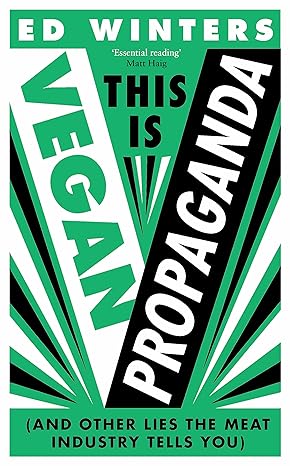
Ed Winters, also known as ‘Earthling Ed’, is a vegan activist who holds lectures and talks across the world about animal ethics and the vegan movement as a whole. He has also done Ted Talks, and you can find these on YouTube or online, and I highly recommend them as they are wonderfully done. I find that Ed always has very well researched and logical arguments for the vegan movement, and I think that is what makes this book work so well. Now personally, I am not a big fan of non-fiction books, but I knew I had to give this a read. Not only because it is about a subject that is incredibly close to me, it is also written by someone who is incredibly knowledgeable about the subject.
I will admit, even as someone who is already vegan and has been for nearly a decade at this point, there were some moments when even I struggled to get through the book. Ed goes into incredibly deep details about animal agriculture, and whilst I thought I knew exactly what was happening with slaughterhouses, dairy farms and broiler chicken farmhouses, even I learnt more about animal agriculture and the sheer atrocities that occur within them. I listened to the audiobook (because I like being able to listen to something whilst I go about my chores and daily life) but there were times where all I could do was stand there in shocked silence whilst I listened to him discuss aspect of the dairy industry. However it was something I needed to hear. The fact is that so much of the meat industry and the entire industry of animal agriculture, is hidden or watered down for the general public, and this in itself is not ok. So just be warned, the facts within this book are horrible, but they need to be known.
But I think this is all necessary. Ed removes any sort of preconception that you may have about the animal agriculture industry and I think that is why this book is also recommended to non-vegans and vegans alike. I found that a lot of his arguments weren’t even arguments – they were the facts. He explained in great detail the reality of the meat industry and did not approach these with any sort of emotion. He stated the plain and simple facts of every aspect of animal agriculture and the science around eating meat. The entire book is deeply researched, well paced and is clear throughout on the message: Veganism is the only moral and sustainable option.
I won’t go into too much detail about what he says on each topic (I don’t want to spoil the book, but I also do not want to get this post flagged or anything!) but I found that Ed approached each topic from a very neutral ground. As a vegan, and someone who has been involved with the movement for quite a time, I do find that some vegan arguments feel like heavily emotive lectures. And whilst there is a time and place for this sort of activism, the facts speak for themselves and I think sometimes the vegan movement can forget this. Now it could be argued that some of his stories, such as his interviews from slaughterhouse workers or farm hands, could be deemed purely anecdotal – these stories are based on that person’s experience rather than a collective experience of staff everywhere across every farm – but they are still presented in a way that focuses on the facts rather than just the emotion of the story.
I think vegans should read this book to learn even more about the entire movement, but also to learn about another avenue of activism and how to advocate in a neutral but effective manner. I personally feel that every type of activism is needed, but that certain members of the public will respond to one type of activism more than another, so knowing as many different methods will always come in handy. But I also think this is very fundamental reading for any non-vegans. One of the biggest issues that this book deals with is the lack of transparency within the meat industry, and that in many cases the general public are very rarely told the truth about where their food comes from. Even if you don’t care about the animals, or the environment, or the moral debate that the vegan movement seeks to have, being fully informed about where your food comes from and how it is prepared should absolutely be of interest to you. You cannot make any decision in life if you are not fully informed, and your food is no different. I believe this book does a wonderful job at removing that veil of secrecy within the food industry, and gives you the unfiltered facts of where food comes from.
 Taylor Talks Vegan